Restoration-first commercial roofing across Western Pennsylvania  ·  Call 814-720-1081

Home / SPF Systems

Insulation and Waterproofing

SPF Roofing Systems for Commercial Buildings: Seamless Waterproofing Plus R-6.3 Per Inch

Spray polyurethane foam, also called spray foam roof insulation, is the only commercial roofing system that waterproofs and insulates in the same operation. It goes down seamless, it adds roughly R-6.3 of insulation value per inch, and it can rebuild slope that the roof has lost.

Certified To Install

Conklin Roofing Systems independent distributor, 45 years
BASF, We create chemistry
We Sell Energy Star certified roofing products
If any of this sounds familiar

You have probably
been here before.

The leak keeps coming back.

It gets patched, it holds through one dry spell, and it is back the next time the wind drives rain the wrong way.

We find where the water actually gets in before anyone quotes you a system.

The replacement quote made you wince.

A full tear-off was quoted on a roof that may not need one, and nobody showed you the condition of the deck.

We say so when a roof does not need replacing, even though replacing it pays us more.

You were talked over, not talked to.

Mil thickness, ponding ratios, a system name you were told to trust. You are responsible for the building and cannot check a word of it.

Nothing happens on your roof without you knowing first. That is the rule here, not a slogan.

“The last roofer took the check and went quiet.”

That is the one that costs the most and it is the reason this company exists. The contractor who came in sixty thousand dollars cheaper than us on a roof nearby is no longer trading. We are the ones installing the replacement.

Ask us who services your roof in year three. It is the only question on this page we can answer with a name.

Two Jobs, One Operation

The Argument for Foam in One Sentence

Every other roofing system waterproofs the building and leaves the insulating to whatever is under the deck. On commercial buildings, foam does both at once, in the same passes, while the building stays open the whole time.

That is why it tends to win on buildings with thin or saturated insulation, where a membrane restoration would solve the water and leave the energy problem exactly where it was.

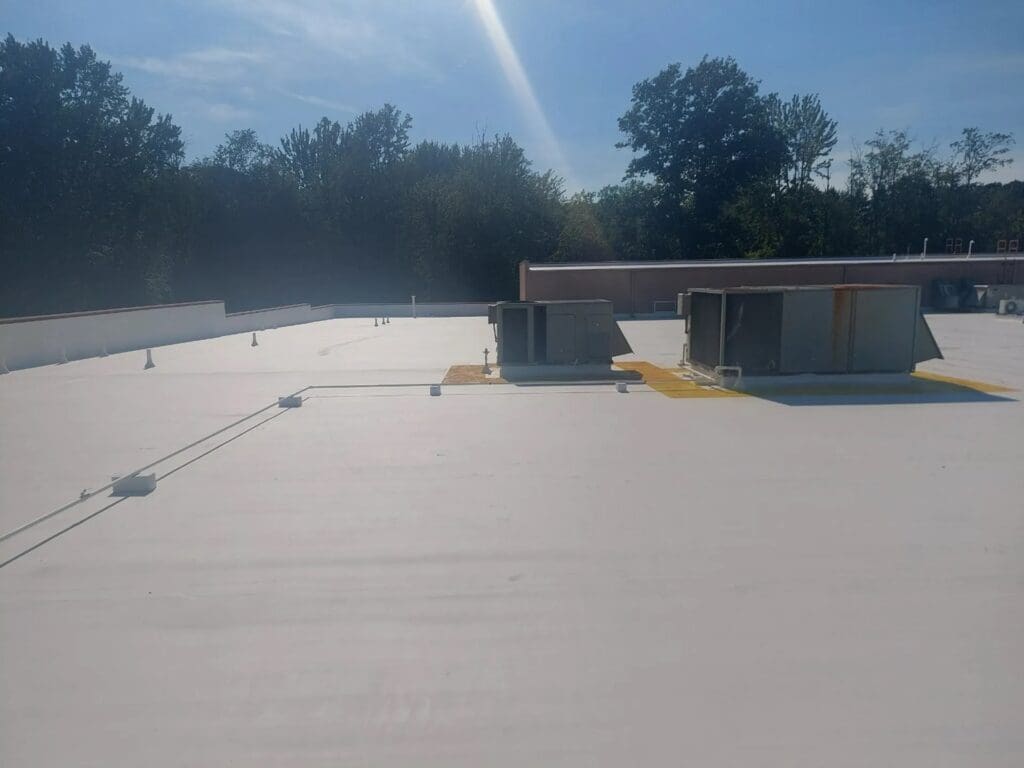
Finished white roof coating on a commercial flat roof restored by Better Built
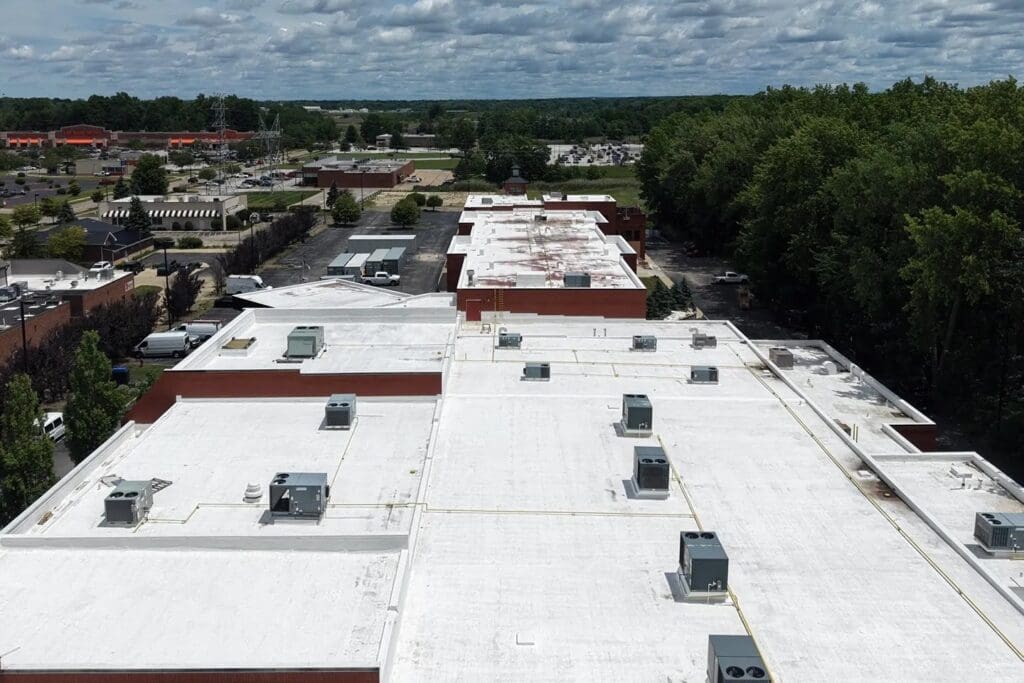
Aerial view of a shopping centre roof coating
Where It Is the Wrong Answer

Said Plainly, Because It Sometimes Is

A roof with heavy daily foot traffic, dense equipment and constant trades access is usually better as a coated membrane system, because it is simpler to maintain and repair.

And no foam roof fixes a failing deck. If the structure is going, this is not the conversation. The qualifying test applies here too.

What the System Does

Four Things Foam Does That a Membrane Cannot

It adds real insulation value.

Roughly R-6.3 per inch, applied as part of waterproofing the building rather than as a separate project. On a conditioned building that shows up monthly rather than once.

It is seamless and fully adhered.

Sprayed in place as a continuous layer with no laps, no field seams and no fasteners through it. It bonds to the substrate, so wind uplift behaves differently to a mechanically fastened roof.

It can correct drainage.

Foam is built up in thickness, so it can re-establish fall toward drains where the slope has been lost. That is the honest fix for ponding and no coating can do it.

It is renewable, not disposable.

The foam is protected by a coating, and at the end of the term the coating is renewed rather than the roof replaced. Same renewal cycle as a restoration.

How It Is Installed

Four Steps

01

Prepare the substrate

Cleaned, dried, wet insulation removed, anything loose fastened. Foam bonds to what is there, so what is there has to be sound and dry.

02

Spray the foam

Applied in passes to the specified thickness, building up more depth where slope needs correcting.

03

Detail the transitions

Curbs, penetrations, edges and terminations, which on a foam roof are formed rather than flashed.

04

Coat and register

A protective coating over the foam for UV and mechanical protection, then the warranty is registered against the finished system.

Straight Answers

SPF Questions

Straight answers on cost, timeline, and what a restoration actually involves. No jargon, no sales pressure.

Still Deciding?
Talk it through with the owner, not a call center.

A free, photo-documented assessment and honest numbers on restore versus replace.

Roughly R-6.3 per inch is the figure for closed-cell spray foam roof insulation, which is high compared with most roof insulation per unit of thickness. What it is worth to you depends on how much your building loses through the roof, which is a genuine question rather than an assumption. On a tall conditioned space it is usually significant.

It is more vulnerable to mechanical damage than a membrane, which is why the coating over it matters and why heavy-traffic roofs are often better served by a coated membrane system. Walkway pads at access points and around equipment are part of a properly specified foam roof.

Both come up and both are real. Coating thickness and the specification address them to a point, and on a roof with a serious history of either we will say if foam is the wrong choice. The comparison page sets out where each system wins.

Frequently yes, which is one of its advantages. Built-up, metal and single-ply roofs can all become the substrate provided they are sound and dry. Wet insulation comes out first, always.

The systems we install are warranted up to twenty years depending on specification, and the roof is renewed by recoating rather than replaced at the end of that.

The Next Step

Start With the Truth About Your Roof

Request your free, photo-documented roof assessment. Honest options, firm numbers, and a roofer who will still be here next year.

Free assessment · Photo-documented · No obligation, no pressure