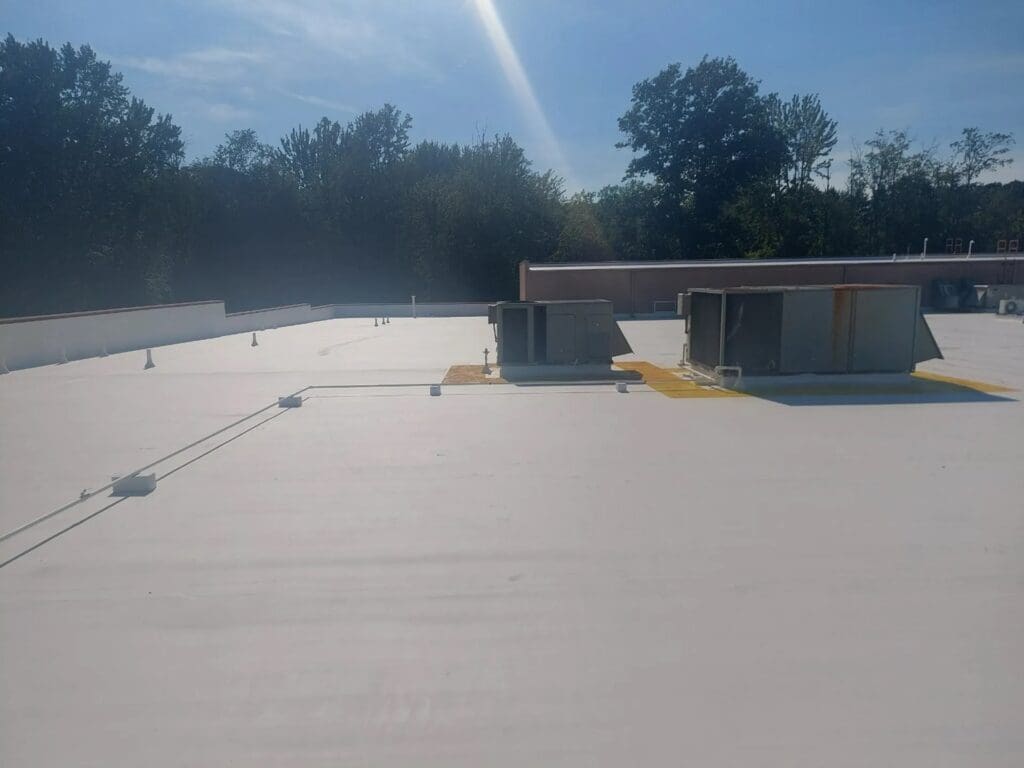
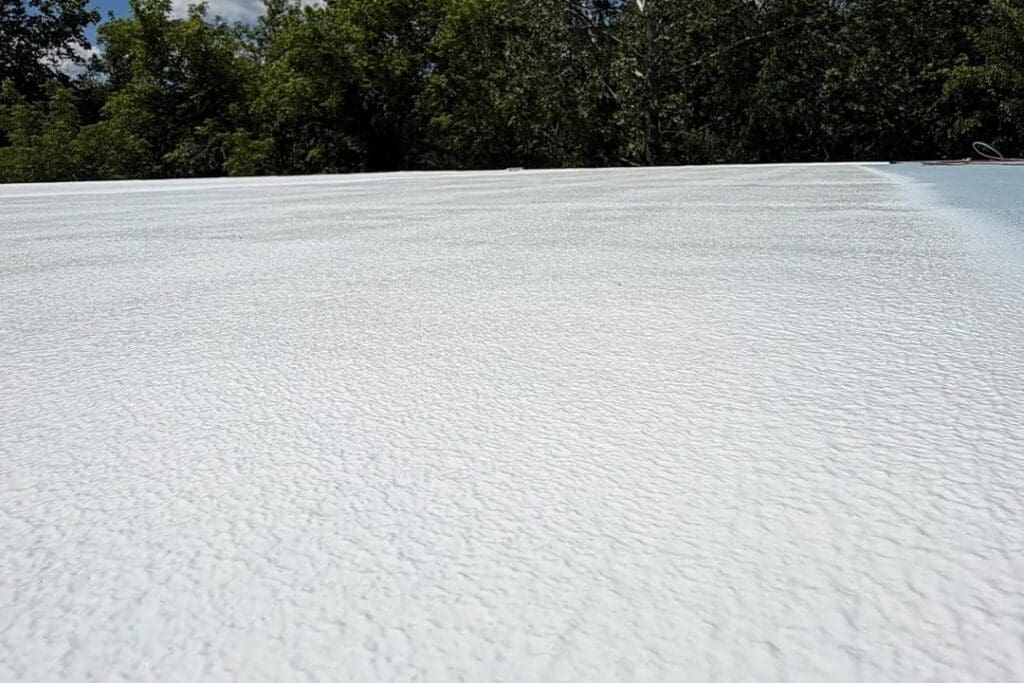
Yes, an EPDM roof can be coated, and EPDM roof restoration is usually the better decision. The rubber itself often has years left when the seams, flashings and adhesive have not.
Free, photo-documented roof assessment
We tell you when restoration is not the right call
It gets patched, it holds through one dry spell, and it is back the next time the wind drives rain the wrong way.
We find where the water actually gets in before anyone quotes you a system.
The replacement quote made you wince.
A full tear-off was quoted on a roof that may not need one, and nobody showed you the condition of the deck.
We say so when a roof does not need replacing, even though replacing it pays us more.
You were talked over, not talked to.
Mil thickness, ponding ratios, a system name you were told to trust. You are responsible for the building and cannot check a word of it.
Nothing happens on your roof without you knowing first. That is the rule here, not a slogan.
“The last roofer took the check and went quiet.”
That is the one that costs the most and it is the reason this company exists. The contractor who came in sixty thousand dollars cheaper than us on a roof nearby is no longer trading. We are the ones installing the replacement.
Ask us who services your roof in year three. It is the only question on this page we can answer with a name.
Shrinkage
A Slow Failure With an Obvious Tell
EPDM contracts gradually over its life. On a large roof that adds up to a real distance, and the tension goes straight into the perimeter flashings and the corners.
If the membrane looks stretched at the parapet, or the corners are lifting, that is what you are seeing. It is the earliest reliable sign that the roof needs attention while it is still restorable.
Black Roofs
Heat Is Aging Your Membrane
A black EPDM roof on a July afternoon gets extremely hot. That heat ages the rubber, cooks the adhesive at the seams and passes into the building below.
Coating it reflective stops most of that. The roof runs cooler, the membrane ages more slowly and the space underneath is measurably easier to keep cool.
Why It Matters
The Rubber Outlasts Everything Holding It Down
EPDM fails at the seams and flashings first.
The membrane is durable. What gives up is the seam tape, the adhesive at the perimeter and the flashings around penetrations. A restoration targets exactly those and leaves the sound rubber in place.
Shrinkage pulls the roof at its edges.
EPDM shrinks slowly over decades, which puts tension on perimeter flashings and corners and eventually pulls them. It is a predictable failure and a visible one once you know to look.
A coated EPDM roof stops being black.
Black rubber absorbs a great deal of heat, which ages it and loads the cooling. A reflective coated surface reverses both.
How It Works
Four Steps on an EPDM Roof
01
Scan and check the perimeter
Moisture scan the field, then look hard at the perimeter, corners and flashings, which is where shrinkage shows up first.
02
Clean and prime for rubber
EPDM needs a primer specified for it. Cleaning has to remove years of accumulated dirt and any residual talc from the membrane surface.
03
Rebuild seams and flashings
Seams, perimeter terminations, corners and every penetration reinforced with fabric and coating. This is where the roof was failing.
04
Coat and register
Full system to specified thickness across the field, registered for a manufacturer warranty of up to twenty years, photographed throughout.
Straight Answers
EPDM Restoration Questions
Straight answers on cost, timeline, and what a restoration actually involves. No jargon, no sales pressure.
Still Deciding?
Talk it through with the owner, not a call center.
A free, photo-documented assessment and honest numbers on restore versus replace.
Yes. EPDM takes a coating well provided it is cleaned properly and primed with a product specified for rubber. It is one of the most reliable substrates for EPDM roof restoration, and the resulting reflective surface also solves the heat absorption that ages black EPDM in the first place.
Yes, substantially. The ballast has to come off before anything else, which adds cost and means the membrane underneath finally gets inspected. Ballasted roofs often hide their condition for years.
That is shrinkage, and it is the classic EPDM failure. The terminations get rebuilt and reinforced as part of the restoration. It is fixable, and it gets more expensive the longer the perimeter is left open.
Seam work alone treats one symptom and leaves the rest of the roof at the same age with no warranty. A restoration addresses the seams and gives the whole roof a new warrantied surface, usually for far less than the difference suggests.
Functionally it becomes a fluid applied roof on a rubber substrate, with the coating providing the waterproofing and the reflectivity. The warranty is written on the new system.
The Next Step
Start With the Truth About Your Roof
Request your free, photo-documented roof assessment. Honest options, firm numbers, and a roofer who will still be here next year.