Restoration-first commercial roofing across Western Pennsylvania  ·  Call 814-720-1081

Home / Silicone vs Acrylic

System Selection

Silicone vs Acrylic Roof Coating

Most owners arrive having been told silicone is simply better, but there is no single best commercial roof coating. It is better at some things and worse at others, and the right answer depends on your roof rather than on which one a contractor prefers to install.

Certified To Install

Conklin Roofing Systems independent distributor, 45 years
BASF, We create chemistry
We Sell Energy Star certified roofing products
If any of this sounds familiar

You have probably
been here before.

The leak keeps coming back.

It gets patched, it holds through one dry spell, and it is back the next time the wind drives rain the wrong way.

We find where the water actually gets in before anyone quotes you a system.

The replacement quote made you wince.

A full tear-off was quoted on a roof that may not need one, and nobody showed you the condition of the deck.

We say so when a roof does not need replacing, even though replacing it pays us more.

You were talked over, not talked to.

Mil thickness, ponding ratios, a system name you were told to trust. You are responsible for the building and cannot check a word of it.

Nothing happens on your roof without you knowing first. That is the rule here, not a slogan.

“The last roofer took the check and went quiet.”

That is the one that costs the most and it is the reason this company exists. The contractor who came in sixty thousand dollars cheaper than us on a roof nearby is no longer trading. We are the ones installing the replacement.

Ask us who services your roof in year three. It is the only question on this page we can answer with a name.

Ponding

The One Question That Settles Most of It

Standing water two days after the rain has stopped is a drainage fault. Ideally it gets corrected, with tapered insulation, added drains or crickets, because water sitting on a roof is a problem whatever is coating it.

Where correcting it is not practical, silicone is the material that tolerates it. That single condition drives more of this decision than every other factor combined.

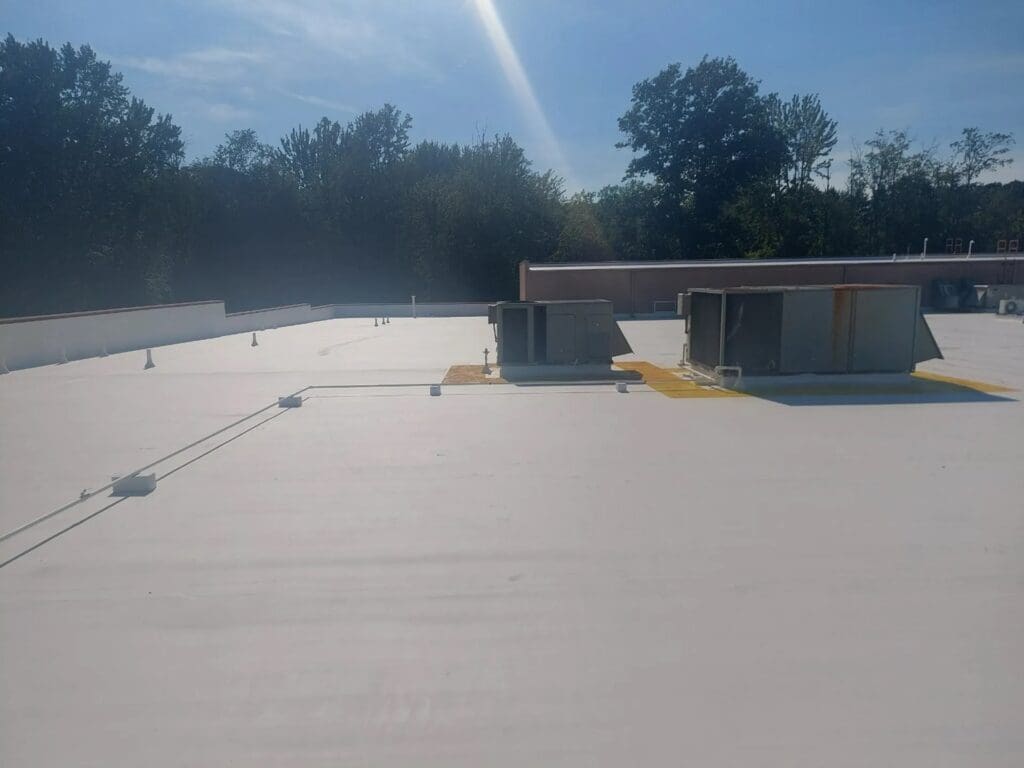
Finished white roof coating on a commercial flat roof restored by Better Built
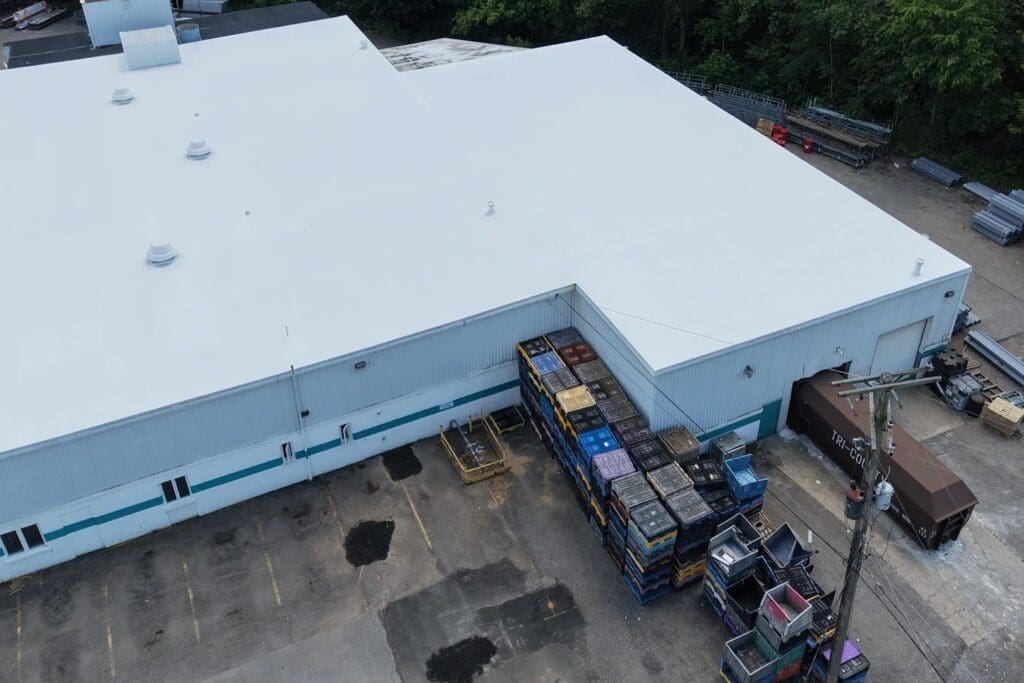
Aerial view of a commercial complex with a coated roof
The Long View

Choosing for Year Twenty, Not Year One

Both systems look identical the week they are finished. The differences show up in how dirty the roof gets, how safe it is to walk on in the rain, and what your options are when the warranty runs out.

That last one is the expensive difference. A roof that can be washed and recoated is a maintenance cost. A roof that cannot is a replacement.

Why It Matters

Neither One Wins Everywhere

Silicone handles standing water.

If your roof ponds and the drainage cannot practically be fixed, silicone is the honest recommendation. It does not soften or wash away sitting under water, which acrylics will.

Acrylic handles foot traffic and recoating better.

Silicone holds dirt, gets slick when wet and is difficult to coat over later, including with more silicone. Acrylic stays cleaner, takes traffic better and can be washed and recoated straightforwardly at end of term.

The roof decides, not the salesman.

Ponding, foot traffic, existing surface, climate and what you plan to do in year twenty all pull in different directions. We pick after the assessment, not before it.

How It Works

Four Things We Check Before Choosing

01

Does it pond

Standing water forty eight hours after rain is the single biggest factor. If drainage cannot be corrected, that narrows the choice immediately.

02

Who walks on it

Roofs with service technicians on them weekly wear differently to roofs nobody visits. That changes both the product and the walkway detailing.

03

What is already up there

Existing silicone severely limits what can be applied over it. Knowing what is on the roof now decides what can go on next.

04

What happens at end of term

A roof that will be recoated rather than replaced is worth choosing for recoatability today. It is a decision made once and lived with for two decades.

Straight Answers

Silicone vs Acrylic Roof Coating Questions

Straight answers on cost, timeline, and what a restoration actually involves. No jargon, no sales pressure.

Still Deciding?
Talk it through with the owner, not a call center.

A free, photo-documented assessment and honest numbers on restore versus replace.

Both carry warranties up to twenty years when installed as a full specified system. Longevity is decided far more by preparation, thickness and reinforcement than by which chemistry is in the bucket.

It is oversimplified. Silicone is genuinely better under standing water, which is a real and common problem. It is worse for dirt pickup, for slip when wet and for recoating later. Whoever told you that may simply install more of it.

Acrylic over silicone is the difficult direction and usually needs the silicone removed or specially primed. That is a reason to think about the second coat before you buy the first.

It is real. A reflective white surface lowers the roof temperature substantially in summer, which reduces cooling load and slows the aging of everything underneath it. Both chemistries are available reflective.

On roofs with drainage that works, an acrylic based reinforced system, because it takes our climate well and recoats cleanly. On roofs that pond and cannot be regraded, silicone. The best commercial roof coating is the one that fits your roof, and we will show you which one yours is.
The Next Step

Start With the Truth About Your Roof

Request your free, photo-documented roof assessment. Honest options, firm numbers, and a roofer who will still be here next year.

Free assessment · Photo-documented · No obligation, no pressure