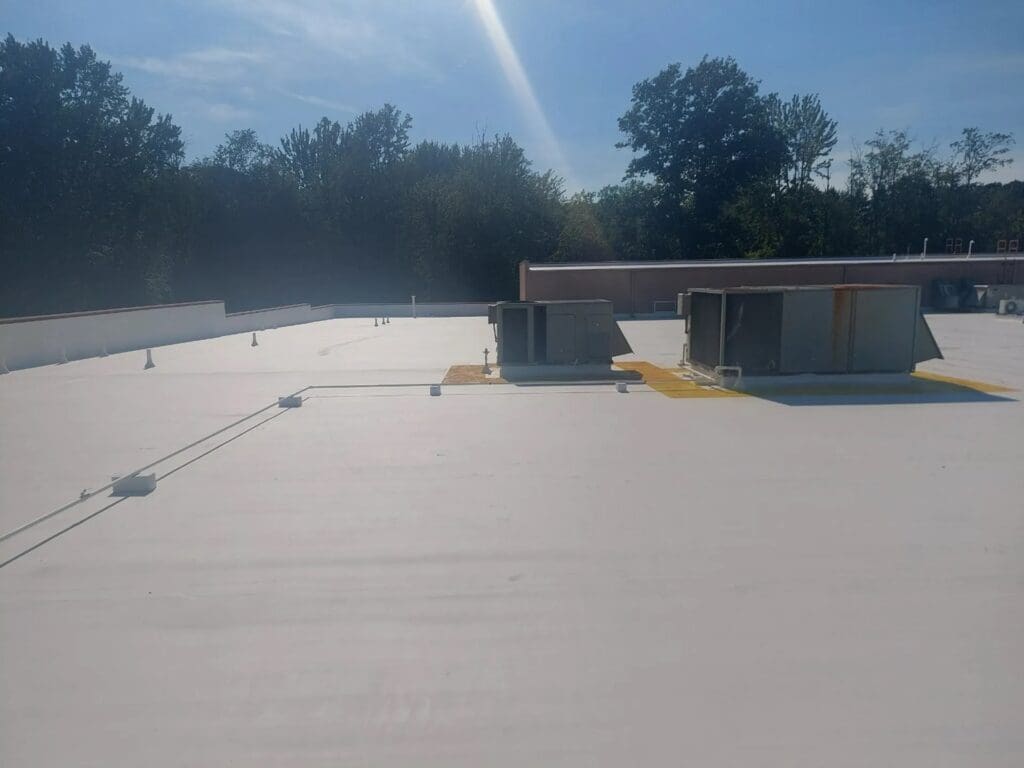
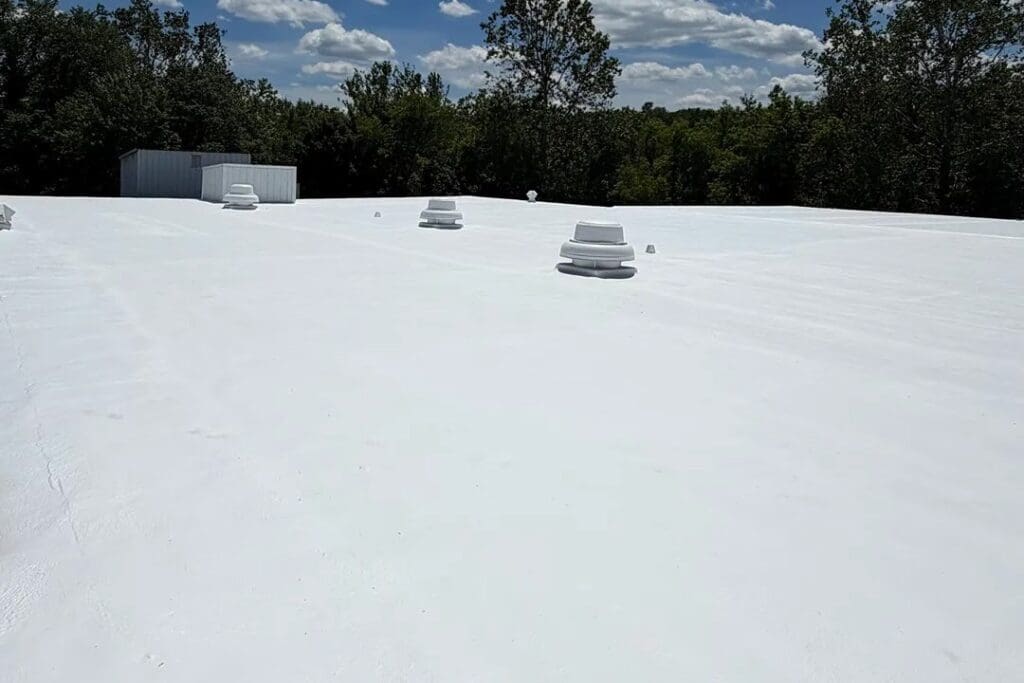
There is an enormous amount of TPO on American roofs that went down in the 2000s and is now reaching the age where the surface is chalking and the seams are tired. Most of it can be restored rather than torn off.
Free, photo-documented roof assessment
We tell you when restoration is not the right call
It gets patched, it holds through one dry spell, and it is back the next time the wind drives rain the wrong way.
We find where the water actually gets in before anyone quotes you a system.
The replacement quote made you wince.
A full tear-off was quoted on a roof that may not need one, and nobody showed you the condition of the deck.
We say so when a roof does not need replacing, even though replacing it pays us more.
You were talked over, not talked to.
Mil thickness, ponding ratios, a system name you were told to trust. You are responsible for the building and cannot check a word of it.
Nothing happens on your roof without you knowing first. That is the rule here, not a slogan.
“The last roofer took the check and went quiet.”
That is the one that costs the most and it is the reason this company exists. The contractor who came in sixty thousand dollars cheaper than us on a roof nearby is no longer trading. We are the ones installing the replacement.
Ask us who services your roof in year three. It is the only question on this page we can answer with a name.
Timing
The Fifteen Year Window
A very large amount of TPO went onto American buildings through the 2000s, and that installed base is now hitting the age where the surface is chalking and the seams have done most of their work.
TPO roof restoration at that point gets the roof a new warrantied surface for a fraction of replacement. Left another few winters, water finds the seams and the answer changes.
Adhesion
The Test That Should Happen Before the Quote
TPO is not one material. Formulations differ by manufacturer and by year, and they weather differently. Some take a coating readily and some need specific priming.
Testing a small area first is quick and it is the difference between a twenty year system and a coating that peels. Anyone quoting a TPO restoration without touching the roof is guessing.
Why It Matters
Aging TPO Is the Best Restoration Candidate There Is
The membrane weathers before it fails.
TPO ages from the top surface down. The sheet loses its protective layer, gets chalky and brittle on top, and starts to look finished long before the material underneath has actually given up.
Seams are the real timeline.
Heat-welded seams are the strength of a TPO roof and the part that fatigues. Reinforcing them as part of a restoration addresses the failure mode directly rather than waiting for it.
TPO roof coating costs far less than tear-off on a large roof.
Removal, disposal and new insulation on a large area is where the money goes. Restoring a sound TPO roof avoids all three.
How It Works
Four Steps on a TPO Roof
01
Check it is dry underneath
Moisture scan first. TPO hides wet insulation well because the sheet stays intact over it. This is the step that decides whether restoration is honest here.
02
Test adhesion, do not assume it
TPO surfaces vary a great deal by manufacturer and age. We test that the system will bond to your specific membrane before quoting, not after starting.
03
Wash and prime
Chalked surface and accumulated dirt come off, and the membrane is primed. Bond strength on TPO is decided almost entirely here.
04
Reinforce seams, coat the field
Every seam and detail is reinforced, then the field is coated to specified thickness and registered for warranty.
Straight Answers
TPO Restoration Questions
Straight answers on cost, timeline, and what a restoration actually involves. No jargon, no sales pressure.
Still Deciding?
Talk it through with the owner, not a call center.
A free, photo-documented assessment and honest numbers on restore versus replace.
In most cases yes, but it depends on the specific membrane and its condition, which is why adhesion testing is part of the assessment. Some older and some heavily weathered TPO needs additional primer, and a small proportion will not take a coating at all. You should be told which before you buy.
It is close to ideal timing for TPO roof restoration. Old enough that the surface is spent and the seams are worth reinforcing, and usually not yet old enough for water to have got into the insulation. Leaving it another five years is what turns a restoration into a replacement.
Because seam failure starts inside the weld and shows on the surface late. On a fifteen year old roof the seams are the component closest to the end of their life, and reinforcing them costs very little as part of the wider job.
With the right preparation and primer, yes, and the warranty is written against that. Without it, no. This is the single most common reason coatings fail on TPO, and it is entirely a preparation issue rather than a product one.
Those sections get cut out and replaced with dry insulation and new membrane, and then the whole roof is restored as one. Partial replacement plus restoration is a normal and much cheaper outcome than a full tear-off.
The Next Step
Start With the Truth About Your Roof
Request your free, photo-documented roof assessment. Honest options, firm numbers, and a roofer who will still be here next year.