Home / Freeze-Thaw
What Freeze and Thaw Does to a Flat Roof in Pennsylvania
Western Pennsylvania roofs cross freezing and back dozens of times a winter. That cycle, not the cold itself and not the snow load, is what ages a commercial roof here faster than the same roof further south.
- Free, photo-documented roof assessment
- Restore and replace numbers, every time
- Warranties honored the full term, up to 20 years
Certified To Install


You have probably
been here before.
The leak keeps coming back.
It gets patched, it holds through one dry spell, and it is back the next time the wind drives rain the wrong way.
We find where the water actually gets in before anyone quotes you a system.
The replacement quote made you wince.
A full tear-off was quoted on a roof that may not need one, and nobody showed you the condition of the deck.
We say so when a roof does not need replacing, even though replacing it pays us more.
You were talked over, not talked to.
Mil thickness, ponding ratios, a system name you were told to trust. You are responsible for the building and cannot check a word of it.
Nothing happens on your roof without you knowing first. That is the rule here, not a slogan.
That is the one that costs the most and it is the reason this company exists. The contractor who came in sixty thousand dollars cheaper than us on a roof nearby is no longer trading. We are the ones installing the replacement.
Ask us who services your roof in year three. It is the only question on this page we can answer with a name.
Why Milder Winters Can Be Worse
Owners assume a hard winter is the damaging one. In practice a winter that freezes solid and stays frozen is relatively kind to a roof, because nothing moves.
A mild winter that crosses freezing every night and thaws every afternoon runs the destructive cycle dozens of times. That is the Western Pennsylvania pattern, and it is why roofs here age at the details.
The Cheapest Appointment on This Site
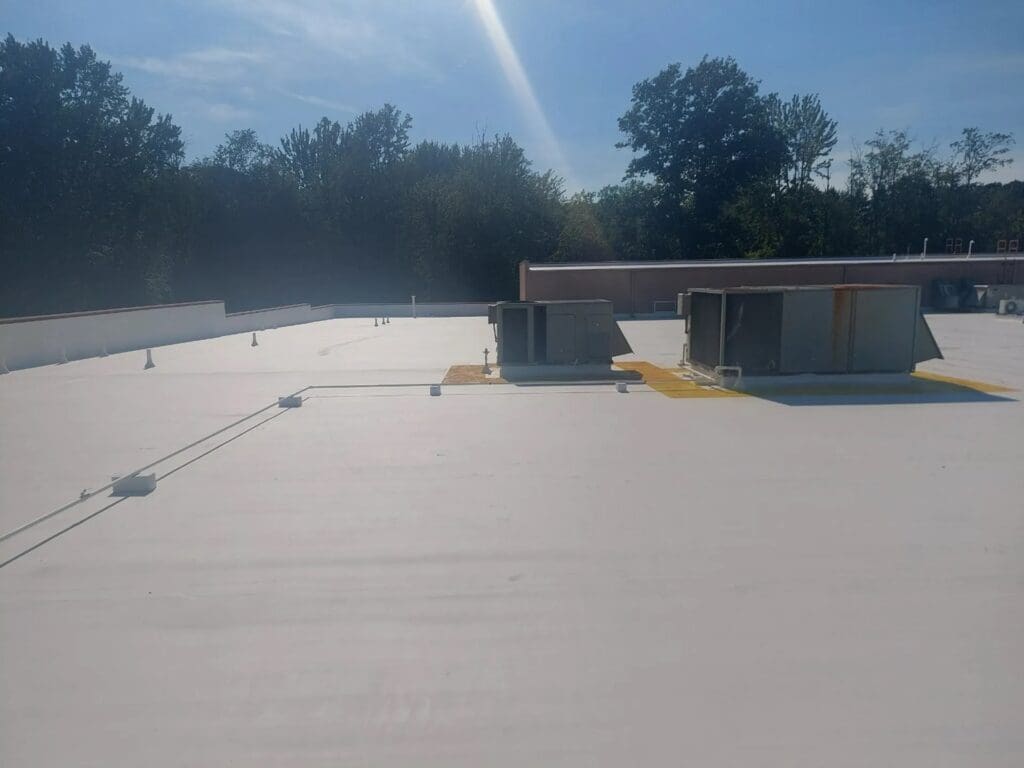
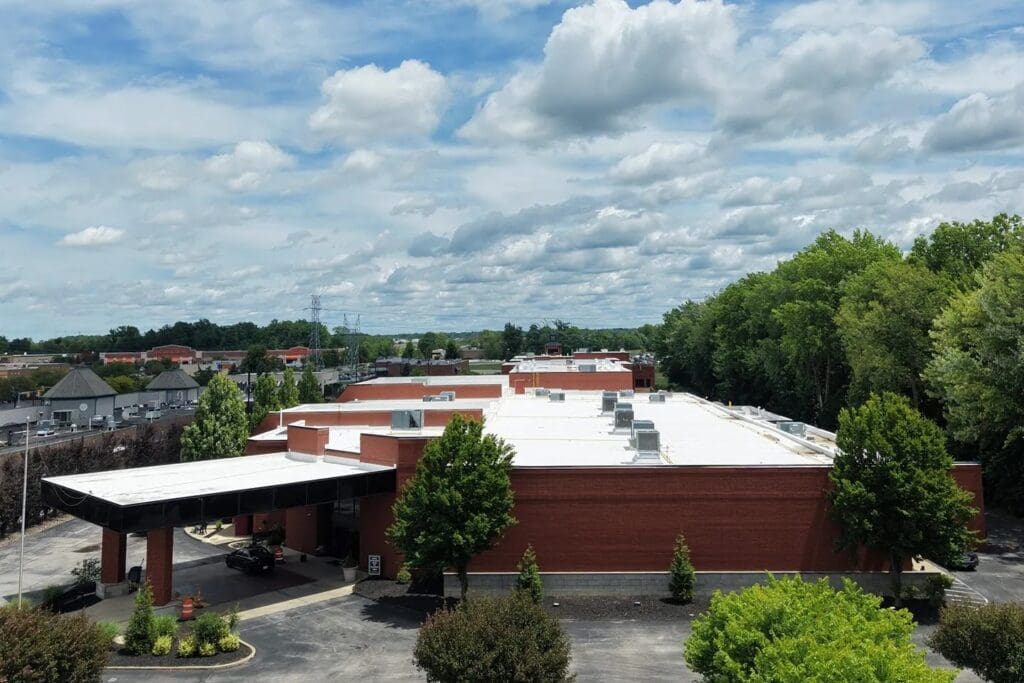
Finding an open lap or a blocked drain in October costs very little to put right. Finding the same thing in February means water has been entering the assembly for months and cannot be worked on safely.
It is the single most useful thing a building owner in this region can schedule, and it is the reason our maintenance rhythm is built around it.
Four Ways the Cycle Damages a Roof
Water in a hairline crack expands as it freezes.
Roughly nine percent, with considerable force. A crack too small to leak in October is measurably larger by March, and that happens at every seam, every lap edge and every crazed patch of surface.
Repeat it forty times a winter.
It is the number of crossings that matters, not how cold it gets. A winter of freezing nights and thawing afternoons does more damage than a colder winter that stays frozen.
Ice dams and blocked drains.
Snowmelt runs to the drain, refreezes at a cold edge or in the drain itself, and the next melt has nowhere to go. Roofs that never pond in summer pond in February.
Thermal shock at the details.
Materials expand and contract at different rates, so a metal curb, a plastic drain body and the membrane between them move differently through every cycle. That is why the details go first.
Four Steps for a Western PA Roof
Inspect in autumn, before the cycles start
The single highest-value inspection of the year here. A detail that is sound in October usually survives the winter; one that is already open will not.
Clear the drains before the first freeze
Because a blocked drain in January cannot be cleared safely and will not clear itself until spring.
Reinforce details rather than seal them
Fabric that accommodates movement survives the cycle. Rigid sealant across a moving joint is what the cycle is designed to destroy.
Inspect again in spring
So winter damage is found in April and repaired cheaply rather than found in July by a leak. The program runs on that rhythm.
Freeze-Thaw Questions
Straight answers on cost, timeline, and what a restoration actually involves. No jargon, no sales pressure.
A free, photo-documented assessment and honest numbers on restore versus replace.
Is snow load the main risk here?
Rarely, on a structurally sound commercial roof. Snow load matters and it is real in Erie in particular, but the damage we actually repair across Western Pennsylvania is overwhelmingly from the freeze-thaw cycle working at seams and details, not from the weight of one storm.
Why does my roof leak during a thaw rather than during rain?
Classic freeze-thaw signature. Meltwater is finding a route that a vertical rain would run straight past, often via a blocked or frozen drain, and it is arriving under a detail rather than on top of it. Tell us it happens on a thaw, it narrows the search a lot.
Do coatings survive this climate?
A properly specified and reinforced system does, and the reinforcement is why. What fails here is thin unreinforced coating over moving joints. Material choice matters too, particularly where water sits. Silicone and acrylic behave differently and the freeze-thaw cycle is part of that decision.
Is a Pennsylvania roof genuinely different from a southern one?
In what fails first, yes. Southern roofs are dominated by UV and heat aging across the field. Ours are dominated by movement damage at details. Same systems, different priorities in preparation and detailing.
When is the best time to have work done?
Restoration work has temperature requirements, so the season runs roughly spring through autumn here. Which is another argument for the autumn inspection: it gives you the winter to plan and the spring to act. We work across Western PA.
Start With the Truth About Your Roof
Request your free, photo-documented roof assessment. Honest options, firm numbers, and a roofer who will still be here next year.
Free assessment · Photo-documented · No obligation, no pressure