
Home / Tax Treatment
Restoration Is Often a Maintenance Expense, Not a Capital One
A replacement is usually capitalized and written off slowly. A restoration can frequently be expensed in the year it is done. That difference can change the real cost of the decision more than the bids do. We are roofers, so take this to your CPA and ask.
- Free, photo-documented roof assessment
- Restore and replace numbers, every time
- Warranties honored the full term, up to 20 years
Certified To Install


You have probably
been here before.
The leak keeps coming back.
It gets patched, it holds through one dry spell, and it is back the next time the wind drives rain the wrong way.
We find where the water actually gets in before anyone quotes you a system.
The replacement quote made you wince.
A full tear-off was quoted on a roof that may not need one, and nobody showed you the condition of the deck.
We say so when a roof does not need replacing, even though replacing it pays us more.
You were talked over, not talked to.
Mil thickness, ponding ratios, a system name you were told to trust. You are responsible for the building and cannot check a word of it.
Nothing happens on your roof without you knowing first. That is the rule here, not a slogan.
That is the one that costs the most and it is the reason this company exists. The contractor who came in sixty thousand dollars cheaper than us on a roof nearby is no longer trading. We are the ones installing the replacement.
Ask us who services your roof in year three. It is the only question on this page we can answer with a name.
Cheaper on Paper, Slower on the Return
Owners compare a restoration quote and a replacement quote as two prices. But one of them may be deductible this year and the other spread across decades, and nobody mentions it because the roofer does not do tax and the accountant is not looking at roofs.
The whole point of this page is to get those two people talking before the decision, not after it.
Why the Scope Is the Thing Your Accountant Reads
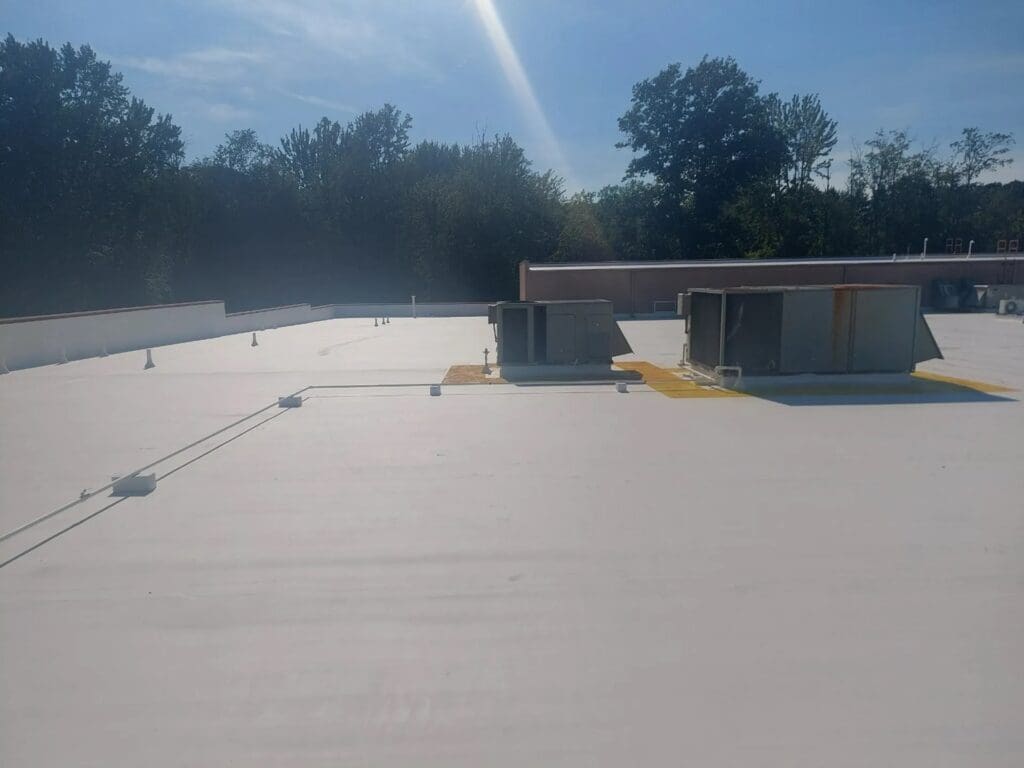
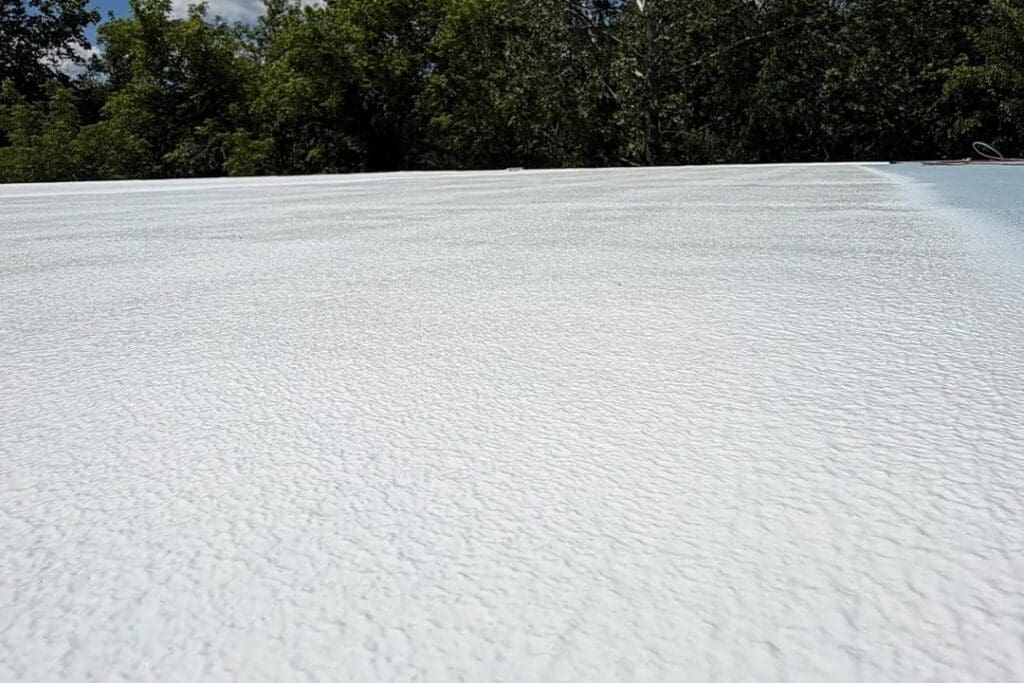
The treatment follows the work, not the label. Cleaning, resetting fasteners, cutting out wet insulation, reinforcing seams and applying a coating system over a roof that stays in place is a different thing to removing a roof and building a new one.
So the scope has to describe the work honestly and specifically. Ours does, and the cost page explains what goes into it.
The Same Roof, Two Very Different After-Tax Outcomes
A replacement is usually capitalized.
Tearing off and installing a new roof is generally treated as an improvement to the building, which means it is capitalized and depreciated over a long schedule rather than deducted now.
A restoration is often maintenance.
Cleaning, repairing and coating an existing roof to keep it working is frequently treated as maintenance in the year it is performed. Same building, same problem solved, different line on the return.
The gap compounds with the price gap.
Restoration already tends to run 50 to 70 percent of replacement cost. If it is also deductible sooner, the two effects stack, and the after-tax difference gets much wider than the quotes suggest.
Four Steps, and the First One Is Not Us
Ask your CPA the direct question
Ask whether a roof restoration on this specific building would be treated as a maintenance expense or capitalized. It is a question they answer routinely and it takes them minutes.
Get the scope in writing first
The answer depends on what is actually being done to the roof, so your accountant needs the scope, not a summary of it. We will put it in writing for exactly this purpose.
Compare after tax, not before
Once you have the treatment, put both bids through it. That is the number that hits the business, and it is often not the one that looked cheaper.
Keep the documentation
Photographs, scope and invoice, filed. Records are what make the position defensible later, and they are the same records that keep a warranty enforceable.
Tax Questions
Straight answers on cost, timeline, and what a restoration actually involves. No jargon, no sales pressure.
A free, photo-documented assessment and honest numbers on restore versus replace.
Is this tax advice?
No, and we will not pretend otherwise. We are a roofing company. This is the treatment we see applied to this kind of work in general, given so you know to ask the question. Your CPA decides how it applies to your building and your return.
Why would coating be maintenance when replacement is not?
Broadly, because one keeps an existing asset working and the other replaces it with a better one. Repairing and coating a sound roof to extend its service life reads differently to a tear-off and new system. Your accountant will apply the actual test to your facts.
Does this apply to a leased building?
It depends entirely on who owns the roof and what the lease says about improvements. That is a genuine question for your accountant and your lease, and the answer changes who benefits from any of this.
Does it change what you recommend for the roof?
No. We recommend restoration when the roof will carry it and replacement when it will not, and that assessment happens before anyone talks about tax. If a roof needs replacing, the tax position is not a reason to coat it.
What do you need to give my accountant?
A written scope describing the work as it will actually be done, the system and thickness specified, and the invoice afterwards. Ask us and it comes in that form.
Start With the Truth About Your Roof
Request your free, photo-documented roof assessment. Honest options, firm numbers, and a roofer who will still be here next year.
Free assessment · Photo-documented · No obligation, no pressure