Home / Absentee Owners
Maintaining a Roof on a Building You Never Visit
Most commercial property is not owner-occupied. If you own buildings you rarely stand on, the roof is the asset most likely to fail quietly and the one you are least likely to hear about until a tenant does.
- Free, photo-documented roof assessment
- Restore and replace numbers, every time
- Warranties honored the full term, up to 20 years
Certified To Install


You have probably
been here before.
The leak keeps coming back.
It gets patched, it holds through one dry spell, and it is back the next time the wind drives rain the wrong way.
We find where the water actually gets in before anyone quotes you a system.
The replacement quote made you wince.
A full tear-off was quoted on a roof that may not need one, and nobody showed you the condition of the deck.
We say so when a roof does not need replacing, even though replacing it pays us more.
You were talked over, not talked to.
Mil thickness, ponding ratios, a system name you were told to trust. You are responsible for the building and cannot check a word of it.
Nothing happens on your roof without you knowing first. That is the rule here, not a slogan.
That is the one that costs the most and it is the reason this company exists. The contractor who came in sixty thousand dollars cheaper than us on a roof nearby is no longer trading. We are the ones installing the replacement.
Ask us who services your roof in year three. It is the only question on this page we can answer with a name.
Roofs Do Not Announce Themselves
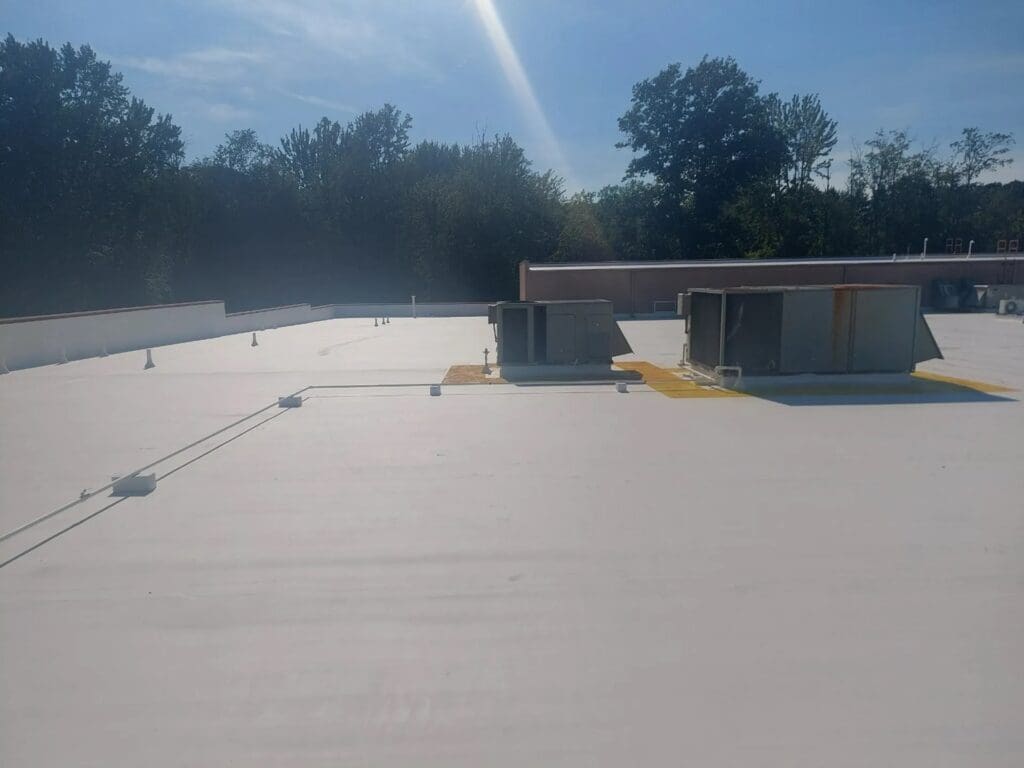
Almost every other building system tells you when it is in trouble. Something stops working, someone complains, a bill arrives. A roof deteriorates for years with no signal at all and then presents as water in a tenant’s space.
For an owner on site that lag is manageable. For an owner who has not stood on the building this year, it is the whole problem.
A Record, Not a Relationship With a Roofer
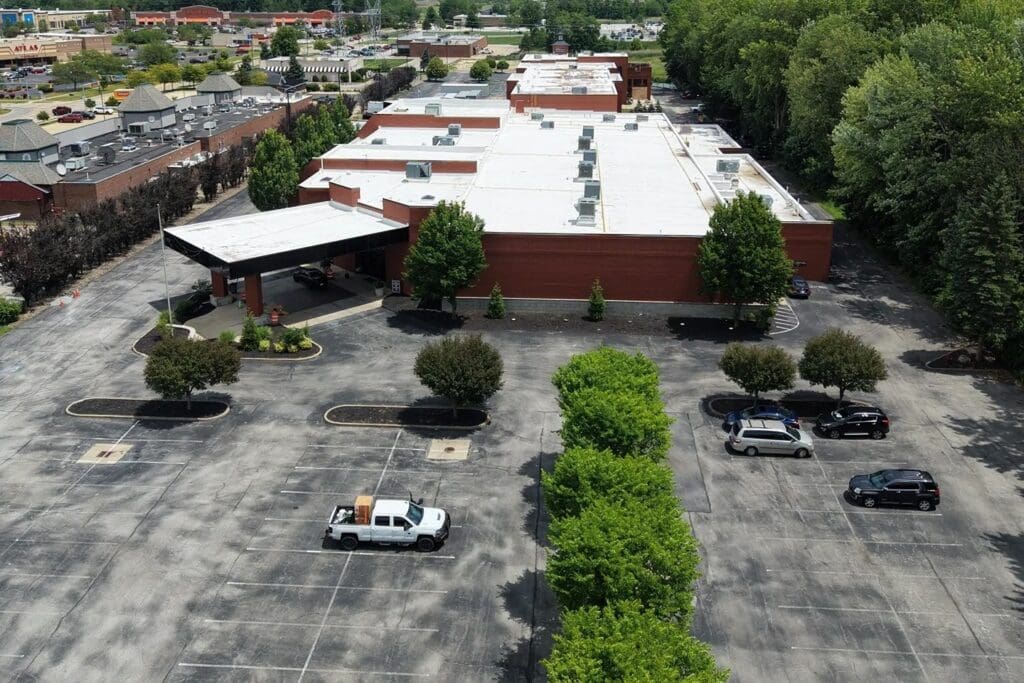
The deliverable for a remote owner is not the repair. It is a dated, photographed condition record per building, held somewhere that survives a change of property manager.
That record is what makes warranties enforceable, budgets defensible and decisions schedulable. The roofing is comparatively straightforward once it exists.
Four Things That Go Wrong From a Distance
You hear about the roof from the tenant.
By which point water has been in the building long enough to damage something. The tenant reports the ceiling, not the roof, and never reports the roof that is about to fail.
Repairs happen without records.
A property manager calls whoever is available, the leak stops, and nothing is documented. Three years later nobody can say what was done, and the warranty position is unrecoverable.
Nobody is watching the assembly.
Wet insulation spreads silently and does not leak until it does. It is the single most expensive thing to discover late and the easiest to detect early.
Decisions get made by whoever is nearest.
Usually under time pressure, usually as a repair, usually without anyone establishing whether the roof is a restoration candidate. A program replaces that with a schedule.
Four Steps
Get a baseline survey
Condition, remaining life and photographs per building. You cannot manage from a distance what has never been measured.
Put it on a schedule
Inspections twice yearly in this climate, autumn and spring, with a written report each time. The reports are the thing you actually own.
Centralize the records
Warranty registrations, inspections and repairs held per building, not in a property manager’s inbox. Coverage is lost on missing records far more often than on failed roofs.
Set the decision points in advance
With both numbers per building, so a roof reaching the end of its life is a scheduled decision rather than an emergency call. That is what budget planning is.
Absentee Owner Questions
Straight answers on cost, timeline, and what a restoration actually involves. No jargon, no sales pressure.
A free, photo-documented assessment and honest numbers on restore versus replace.
I have a property manager. Is that not their job?
Property managers handle events well and assets less well, because that is what they are engaged and paid to do. They will get a leak stopped quickly. What they generally do not do is track the condition of the assembly across years or hold warranty documentation, and neither of those failures is visible until it costs money.
What does this actually cost me each year?
The inspections themselves are modest, and the assessment is free. The real economics are that catching wet insulation at one bay rather than a quarter of the roof is the difference between a repair and a replacement, and that difference is the largest number in commercial roofing.
How do I know the inspections are being done properly?
You get photographs and a written report each time, dated, with the same format every visit. If a report ever looks like the previous one with a new date, ask. That is a fair test and we would rather you applied it.
What if I own buildings in several states?
Then the portfolio rather than the building is the unit. The asset management program and the multi-property page cover how that runs.
My tenant is responsible for the roof under the lease. Does this still matter?
Usually yes, and it is worth reading the lease closely. Tenants maintain to their occupancy horizon, which is often shorter than your ownership horizon, and the asset you get back at the end reflects that. Whoever pays, you want the records.
Start With the Truth About Your Roof
Request your free, photo-documented roof assessment. Honest options, firm numbers, and a roofer who will still be here next year.
Free assessment · Photo-documented · No obligation, no pressure